
Arabic Keyboard
Arabic Numerals and Their Use: History, Evolution, and Global Impact
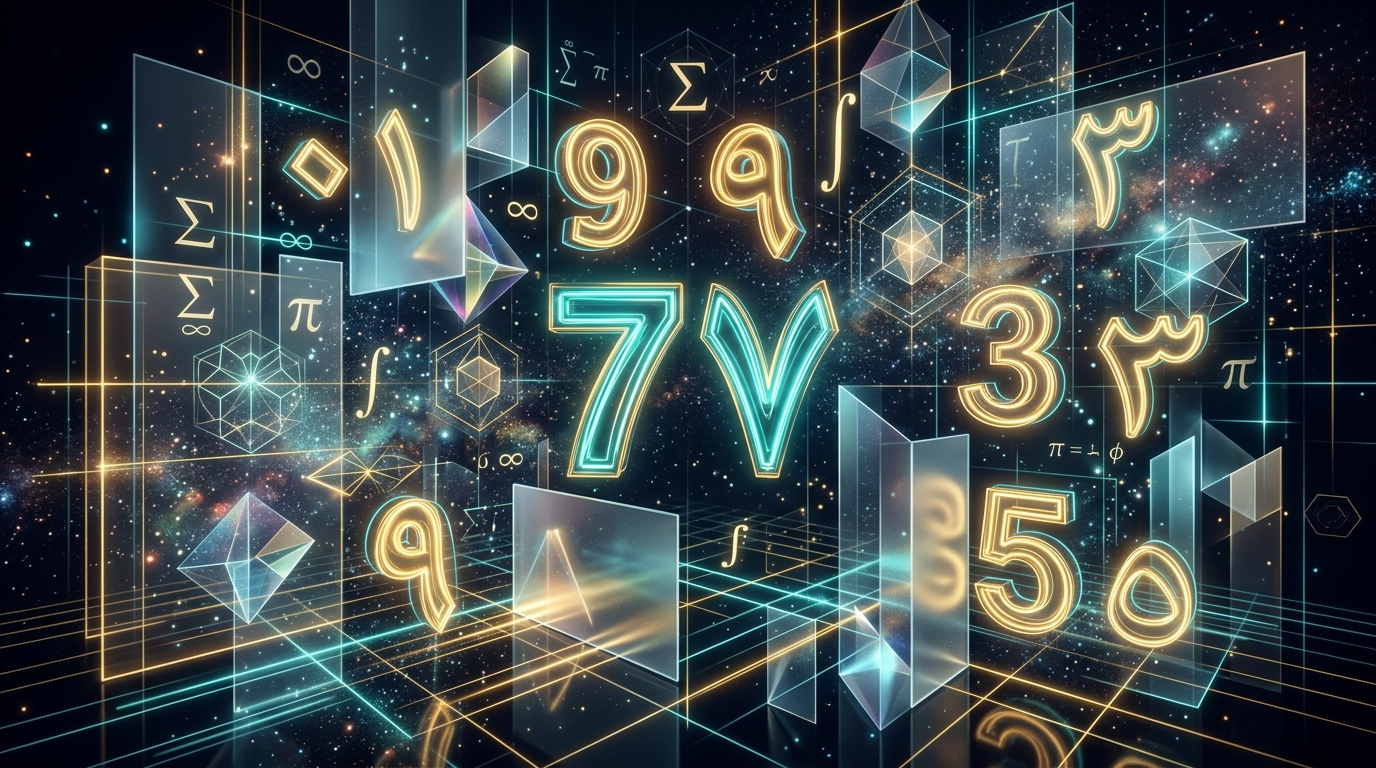
The glyphs we use daily to count, measure, set prices, or program (0, 1, 2, 3, 4, 5, 6, 7, 8, 9) are universally called "Arabic numerals". However, their history is the result of a fascinating intercultural journey combining Indian genius, the scientific synthesis of the Arab-Islamic world (closely linked to the history of the Arabic language), and progressive adoption by the West. Understanding Arabic numerals and their use means exploring the very foundation of modern mathematics.
Why did this system supplant Roman numerals? How is its notation organized, and what are its variations around the world? This comprehensive guide reveals the secrets of decimal positional notation.
1. The Origin of Arabic Numerals: A Journey from India to the West
Contrary to what their name might suggest at first glance, these glyphs were born in India around the 3rd century BC. Indian mathematicians developed a revolutionary system based on ten symbols and the principle of position.
In the 8th century, under the Abbasid caliphate in Baghdad, Indian mathematical texts were translated into Arabic. It was the famous Persian mathematician Al-Khwarizmi (whose name gave rise to the word algorithm) who formalized the use of this system in his foundational work. He described methods for rapid calculation and introduced these glyphs on a massive scale into the administration and commerce of the Islamic Empire.
It was through Muslim Spain (Al-Andalus) and the work of Pope Sylvester II (Gerbert of Aurillac), and later the Italian mathematician Fibonacci in the 13th century, that Europe discovered these characters. Being simpler, they put an end to the complexity of abacus calculations imposed by Roman numerals.
2. The Revolution of Positional Notation and Zero
The major asset of Arabic numerals lies in two key concepts that revolutionized science:
- The positional system: The value of a digit depends entirely on its position in the number. In the number 252, the "2" on the right is worth two units, while the "2" on the left is worth two hundreds. Roman numerals (like CCV) did not allow this flexibility.
- The invention and use of Zero (Sifr - ٠): The Arabic word sifr (meaning "emptiness") gave rise to the words "cipher" and "zero". Zero is not just the absence of quantity; it is an indispensable mathematical operator that serves as a position marker (allowing us to differentiate 25 from 205).
3. Western Arabic Numerals vs. Eastern Arabic Numerals
There is a major linguistic and geographical subtlety. The signs used in Europe and worldwide (1, 2, 3) are called "Western Arabic numerals" or *Ghubar*. They were developed in North Africa and Andalusia.
Conversely, in the Near and Middle East (Egypt, Saudi Arabia, Iraq, UAE), "Eastern Arabic numerals" (or Indo-Arabic numerals) are mainly used. Here is a comparative table to understand their visual correspondence:
| Western Numerals (Ghubar) | 0 | 1 | 2 | 3 | 4 | 5 | 6 | 7 | 8 | 9 |
|---|---|---|---|---|---|---|---|---|---|---|
| Eastern Numerals / Mashreq | ٠ | ١ | ٢ | ٣ | ٤ | ٥ | ٦ | ٧ | ٨ | ٩ |
4. Modern Use and Impact on Digital SEO
In the modern web ecosystem, managing numbers, punctuation, and writing in Arabic is of particular importance for search engine optimization (SEO) and internationalization (i18n):
- URL Standardization: For search engines like Google, it is highly recommended to use Western Arabic numerals (1, 2, 3) in URL structures, even for sites written in Arabic, to avoid character encoding bugs (complex percent codes).
- International Usability: Many mobile apps and websites in the Middle East now offer switches allowing users to toggle the display of numerical data (prices, statistics, phone numbers) between Eastern and Western glyphs according to their preferences.
Frequently Asked Questions (FAQ)
Why do Eastern numerals (١, ٢, ٣) sometimes resemble our numerals?
It's the other way around! Our numerals (1, 2, 3) derive from the evolution of Eastern and Maghrebi scripts. For example, if you rotate the Eastern numeral two (٢) 90 degrees to the left, you begin to see the shape of our modern digit 2 appear.
What is the origin of the legend of the angles to explain the shape of numerals?
There is a popular (but historically inaccurate) theory claiming that each Arabic numeral was drawn based on the number of angles it contains (1 would have one angle, 2 would have two angles, etc.). Science historians have proven that this is a late invention and that the evolution of the glyphs is purely cursive.
Which Arabic countries use our numerals (1, 2, 3) daily?
Maghreb countries (Morocco, Algeria, Tunisia) almost exclusively use Western Arabic numerals (1, 2, 3) in administration, education, and license plates. Levant and Gulf countries prefer Eastern numerals (١, ٢, ٣), although the use of the Western script is growing rapidly due to digital technology.
Recommended Arabic Tools & Resources
Essential online tools to enhance your Arabic typing, translation, and learning experience:
- Arabic Keyboard Online – type Arabic characters easily with our smart virtual keyboard.
- Arabic Translator Online – translate Arabic words, sentences, and texts instantly.
- Arabic Text Converter – fix Arabic script shaping and direction for design and editing tools.
Conclusion
The study of Arabic numerals and their use highlights the universal nature of science. By breaking down geographical barriers, this highly efficient numbering system enabled the rise of algebra, modern accounting, astronomy, and, more recently, computing. By adopting these ten simple symbols, humanity endowed itself with a common, fluid, and borderless mathematical language.
To start typing and practicing right away, try our free Arabic keyboard online.